How a law enforcement request moves through Kodex.
Receive, respond, and report on every request, in one place.

.png)


One verified intake.
Every request, every channel, every requester, handled through one verified intake.
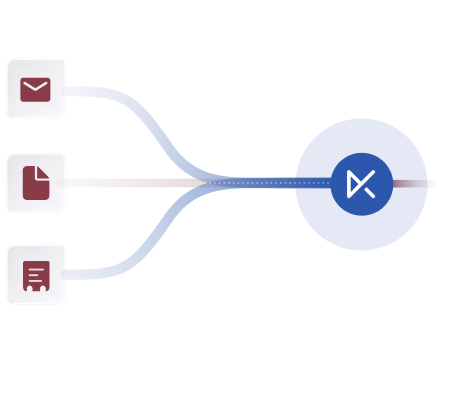
One door, not a dozen.
Email aliases, fax lines, legacy ticketing systems, and public contact forms collapse into a single intake on your own custom domain.
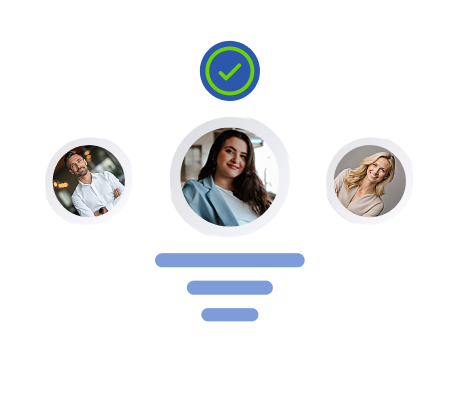
Verified before they get in.
Every requester is checked against the Kodex Global Network: 15,000 government agencies, 150,000+ verified agents, and 180+ countries.

Structured intake, not PDF triage.
Intake forms adapt to the jurisdiction and request type, so bad requests get corrected before they're submitted, not after.
One secure workbench.
Manage, fulfill, and deliver every request through one secure, auditable workflow.

One workbench, full history.
Status, tasks, history, linked subjects, secure messages, preservation, and translation all live inside the case record.

Production stays in your environment.
Account lookups return via API, drafts route for review, and data stays under your control until delivery.

Delivery, encrypted and auditable.
Download links are encrypted, expire on schedule, and log chain-of-custody from production to delivery.


The work reports itself.
The same case data produces executive dashboards, regulatory reports, and recovered cost.
Live operational visibility.
Dashboards show volume, response time, SLA performance, and trends by jurisdiction, agency, and request type. Internal reporting feeds monthly compliance reviews. Historical case search lets your team find patterns, prior decisions, and linked investigations across years of activity.
Transparency reports without
spreadsheet work.
Regulator-ready and public-facing transparency reports are generated from the same data your team is already working in. SAR, FinCEN, GDPR, and other structured compliance outputs come out of the platform without spreadsheet work.


Cost recovered automatically.
The cost of doing the work, which most companies absorb because invoicing every agency has never been practical at scale, gets recovered automatically.

Invoice Automation
Sent
Sent
Sent
0 +
Invoices send
$0
Revenue recovered
Before teams switch.
A ticketing system handles intake. A CLM handles contracts. Neither one verifies the requester or produces data on a verified request. Kodex is built around the request lifecycle, from the requester at the door to chain-of-custody at delivery. That's a different shape of problem from anything in the adjacent categories.
Most customers keep their legacy channels open during the transition and direct requesters to the verified path over time. Once the verified channel is carrying the work, the legacy aliases get sunset. You don't have to flip a switch on day one.
Yes. Every requester is verified through the Kodex network before they reach you. That verification is what makes the rest of the workflow possible. Most verified agencies clear sign-up automatically. The rest go through human review with the Kodex Threat Intelligence team.
Through API. Kodex connects directly to your case management, ticketing, and custom systems of record. Account lookups return from your backend. Drafts route through your existing review workflow. Nothing has to be rebuilt on Kodex to use Kodex.
In your environment. The data your team produces stays under your control until you decide to deliver it. Kodex sees what you return at the moment of delivery, not before.
Built for the work, not for the workflow.
Most software in this category was built around a workflow. Kodex was built around the work: the request that arrives, the request that goes out, and the audit trail that connects them.
.png)